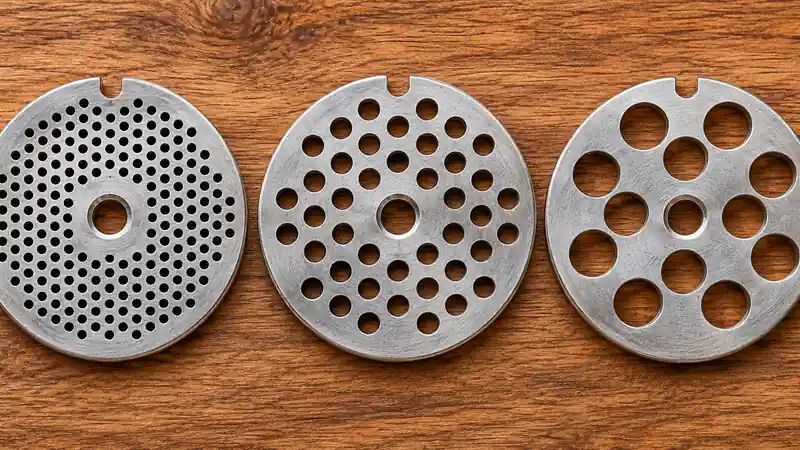
Meat grinder plate hole size describes the openings through which ground meat exits. Larger holes generally produce a coarser result; smaller holes produce a finer result. The exact texture also depends on the cutting assembly, the meat, and the grinding process.
To compare replacement options after checking fit, see our guides to meat grinder plates and plate sets.
Plate hole size is different from the plate’s outside diameter and from the grinder’s nominal head number. All three dimensions matter for different reasons: texture, physical fit, and the machine’s size family.
Coarse, medium, and fine: what the labels mean
| Description | Relative opening | Practical use |
|---|---|---|
| Coarse | Larger holes | More visible pieces and a coarser texture |
| Medium | Between the other options in a given set | Intermediate texture |
| Fine | Smaller holes | Finer texture when used as directed |
These are relative terms, not universal technical standards. A manufacturer’s medium plate may have a different hole diameter from another brand’s medium plate. Compare the stated measurement rather than choosing from the label alone.
Hole diameter versus outside diameter
The holes influence the size of the pieces leaving the plate. The outside diameter describes the disc that must fit the grinder head. The center opening and any tabs or notches also affect fit. Thickness and the way the knife sits against the plate can matter too.
For example, LEM’s listing for a specific #8 plate provides both a plate diameter and a hole diameter. Those numbers describe different features and must not be substituted for one another or assumed to apply to another manufacturer’s product.
Choosing a texture for the food
Start with the plate supplied for the texture you want, then adjust a later batch based on the result. A coarser grind retains more visible pieces; a finer grind passes through smaller openings. Some recipes call for more than one pass, but follow your machine’s instructions and keep meat properly chilled during preparation.
Plate selection does not guarantee a particular result. The knife must be correctly installed and in usable condition, and the plate must fit the machine. If output smears, check the manufacturer’s troubleshooting guidance for preparation, assembly, and cutting component condition before attributing the issue to hole size alone.
How to buy a compatible replacement
- Find the grinder’s brand and exact model.
- Check the manufacturer’s supported replacement parts or compatibility list.
- Compare outside diameter, thickness, center opening, and alignment features with the original.
- Select the desired hole diameter from the compatible options.
- Confirm the knife is also the correct part and assemble according to the manual.
A shared #8 or #12 label does not guarantee interchangeability. Do not force a plate into a head or substitute a blade based only on appearance. If the listing lacks dimensions or model support, ask the manufacturer or seller before ordering.
Care for the plate and knife
Unplug an electric grinder before taking it apart. Handle the cutting knife carefully, wash and dry the parts as the manufacturer directs, and check the manual before using a dishwasher. USDA recommends washing utensils and surfaces that contacted raw meat to reduce cross-contamination.
Keep the two decisions separate: first find a plate that fits the exact machine, then choose an available hole size for the texture you want.
