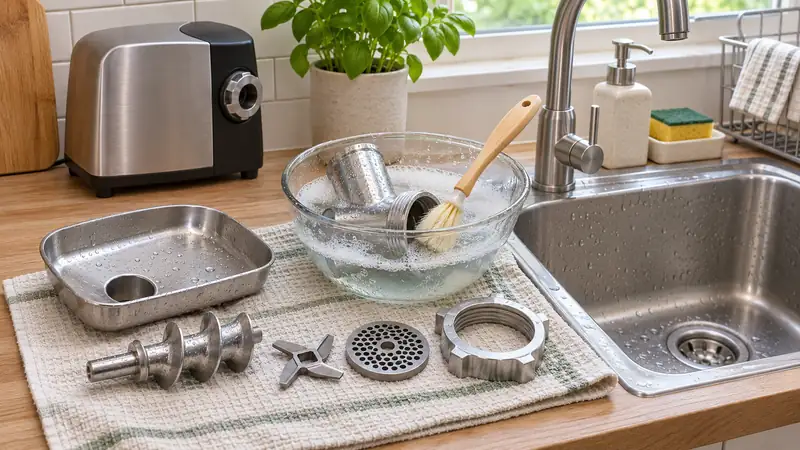
To clean a meat grinder, switch it off and unplug it if electric, then disassemble the food-contact parts as the manufacturer directs. Wash, rinse, and dry each permitted component according to its instructions, and clean the surrounding work area before storing the equipment.
A suitable brush can help reach plate holes and narrow passages; our guide compares meat grinder cleaning brushes.
Handle the knife carefully. Keep the motor housing and electrical connections out of water, and check the manual before using a dishwasher or sanitizer on any component.
What you need
- The grinder’s instructions and a clear workspace.
- Warm water, dish soap, a soft sponge, and a suitable cleaning brush.
- Clean towels or another drying method approved by the manufacturer.
- Food-contact sanitizer only if appropriate for the surface and permitted by its directions.
Clean the grinder after use
- Stop and disconnect. Switch the machine off and unplug an electric grinder. For an attachment, turn off the mixer and remove the attachment as its manual directs.
- Take apart the head. Remove the retaining ring, plate, knife, auger, head, and tray as applicable. Note the order and orientation so you can reassemble them correctly. The blade may be sharp.
- Remove remaining food. Clear accessible residue with a suitable brush or utensil while the machine is disconnected. Do not reach into an operating feed tube.
- Wash the food-contact pieces. Wash the parts the manufacturer permits in warm, soapy water. Use a brush to reach plate holes, the head, and the feed tube without damaging their surfaces.
- Rinse and dry. Follow the manufacturer’s directions for rinsing and drying each part. Pay attention to recesses where water can remain, and dry before storage to reduce corrosion risk.
- Clean the exterior and work area. Wipe the motor housing as instructed without immersing it. Wash the counter, sink, utensils, and other surfaces that contacted raw meat.
USDA’s cross-contamination guidance explains why utensils and surfaces exposed to raw meat need washing. Cleaning removes food residue; sanitizing is a separate step. Where sanitizing is appropriate, use a product and procedure suitable for food-contact surfaces and the equipment material, following the relevant label and manufacturer instructions.
Can grinder parts go in the dishwasher?
Only when the manufacturer says the specific part is dishwasher-safe. Removable does not mean dishwasher-safe, and metal does not identify the correct washing method. KitchenAid’s metal food grinder guidance, for example, requires hand-washing its metal parts and identifies certain plastic parts as dishwasher-safe. Other models may differ.
Avoid abrasive pads or harsh chemicals unless the manual permits them. Do not use a cleaning method intended for one alloy or component on another merely because they look alike.
Maintenance between sessions
Before reassembly, inspect the plate, knife, auger, and seals for damage or excessive wear. Replace worn parts with components documented for the exact model. If the manual calls for a protective coating or lubrication, use only the specified product and follow its directions; not all parts have the same requirements.
Store clean, fully dry parts where they are protected from contamination. Keep the manual or a photo of the correct assembly order available. Before the next use, inspect and assemble the cutting components according to the manufacturer’s instructions.
If a part shows rust or discoloration
Stop and consult the manufacturer’s material-specific care instructions. A gray film on an aluminum part, surface rust, and damaged plating are different problems; a single abrasive treatment is not appropriate for all of them. Replace damaged food-contact parts when the manufacturer recommends it or their condition prevents safe use.
Prompt disassembly and careful drying make cleaning more manageable and preserve the ability to inspect the cutting parts. The exact machine manual remains the authority for compatible cleaners, dishwasher use, and storage.
