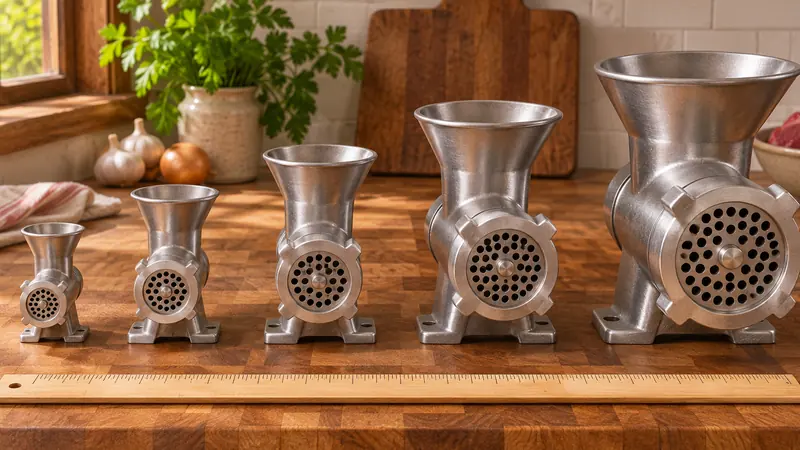
Meat grinder numbers such as #5, #8, #12, #22, and #32 identify nominal grinder head sizes. In general, a larger number describes a larger grinding head and plate, but it does not tell you the motor power, actual throughput, or whether every replacement part will fit.
Compare specific head sizes in our guides to #8 grinders, #12 grinders, and #22 grinders.
For a useful comparison, start with the amount of meat you expect to prepare in a session. Then check the specifications and operating instructions for the particular machine. A nominal size is a starting point, not a complete workload rating.
What the grinder number describes
The number refers to a size family associated with the grinding head and plate. The plate is the round disc at the outlet; the auger pushes food toward the knife and plate. Manufacturers sell grinders in several of these numbered sizes, including LEM’s #5 through #32 range.
Do not confuse the head size with the diameter of the holes in the plate. A #12 grinder can have different compatible plates with different hole sizes. The head size helps describe the equipment; the holes influence the coarseness of the output.
Comparing the size families
| Size | Where to start | What still needs checking |
|---|---|---|
| #5 | Small head for compact equipment | Feed opening and model workload |
| #8 | Another small head size | Capacity and available plates |
| #12 | A larger head family | Motor, footprint, and operating limits |
| #22 | Large head family | Power requirements and handling |
| #32 | Larger head family | Space, electrical needs, and cleaning |
These descriptions compare nominal sizes, not tested output. A particular manual grinder and an electric grinder can carry a similar size designation while requiring very different effort and operating time. Larger equipment can also be heavier and take more room to disassemble and store.
Does a larger number mean faster grinding?
Not by itself. Motor design, feed arrangement, cutting condition, meat preparation, and the plate all affect the work. An advertised maximum processing rate is a manufacturer’s claim, not proof that the machine can maintain that rate continuously. Check the manual for operating and cooling limits rather than inferring a duty cycle from the head size. For a wider comparison of machines for different workloads, see our meat grinder buying guide.
For a household that grinds a few portions occasionally, a compact machine may fit the space and cleaning routine better. Someone preparing a larger amount of venison may value a larger feed system, but should compare the stated workload, operating restrictions, and practical setup of individual machines.
How to check replacement plate fit
Start with the exact grinder brand and model, then compare the manufacturer’s compatibility information. Check the plate’s outer diameter, thickness, center opening, and alignment features against the original. Nominal size alone does not guarantee that a generic plate or knife fits correctly.
As one model-specific example, LEM lists its #8 replacement plate with an outside diameter of 2⅜ inches. That dimension should not be transferred automatically to every machine labeled #8. The hole measurement on that listing describes a different dimension.
Questions to ask before choosing a size
- How much meat will you prepare in one session, and how often?
- Does the manufacturer’s published capacity and operating limit fit that workload?
- Will the machine fit your work surface and storage space?
- Are the plates and replacement cutting parts documented for the exact model?
- Can you comfortably remove, wash, dry, and reassemble its components?
Choose the machine as a complete system. The numbered size helps narrow the options, while the manual, components, workload, and cleaning requirements determine whether a particular grinder fits your kitchen.
